Aurora from another Galaxy
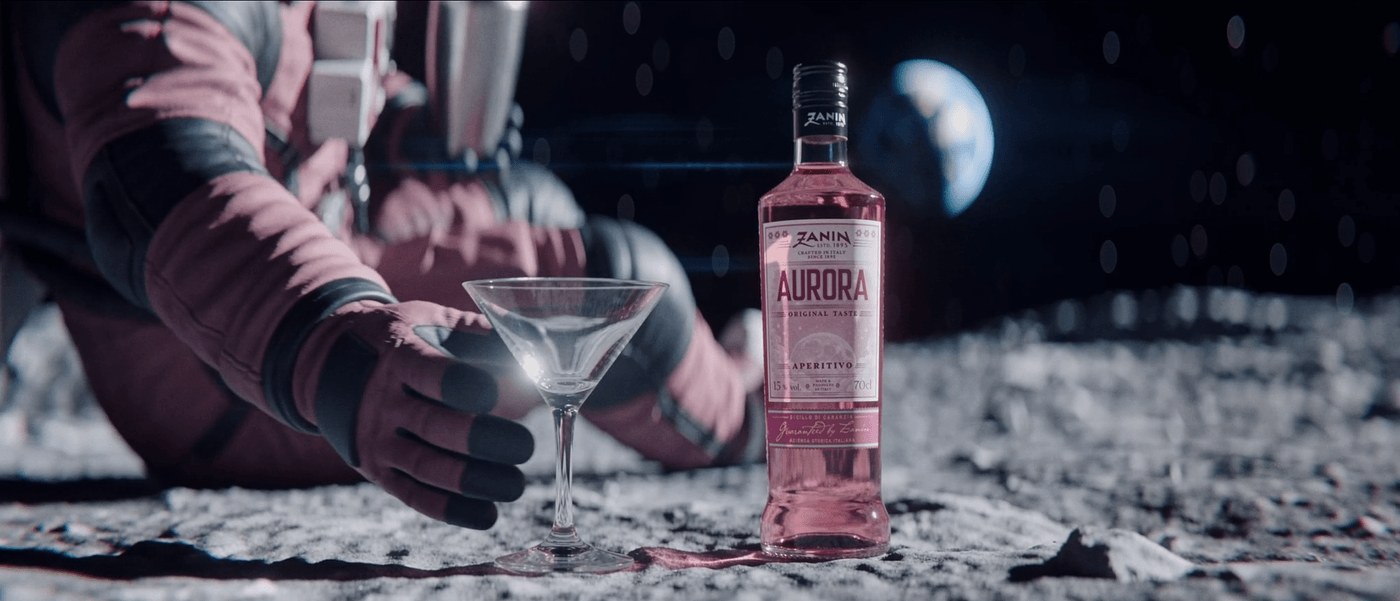
The freshness of the production
Here is the arithmetic that decides projects like this one. A moon beach and a meteor, shot conventionally, cost more than the launch of a liqueur that retails at under fifteen euros. Which is usually where an idea like this quietly dies and gets replaced by a bottle on a marble surface.
It did not die, because the production was built to be light. A small team, a generative and post-production pipeline that lets an image be tested rather than budgeted for, and iteration measured in days instead of pre-production weeks. Four films and a vertical cut, delivered across a single season, at a cost that let the client spend the rest of the money on actually being in the room with buyers.
We are not romantic about this. Working fast is not a style, it is what makes certain images affordable at all. But the effect on the work is real: when a frame costs a morning instead of a shooting day, you throw away the first six versions, and the seventh is the one nobody would have paid to try.

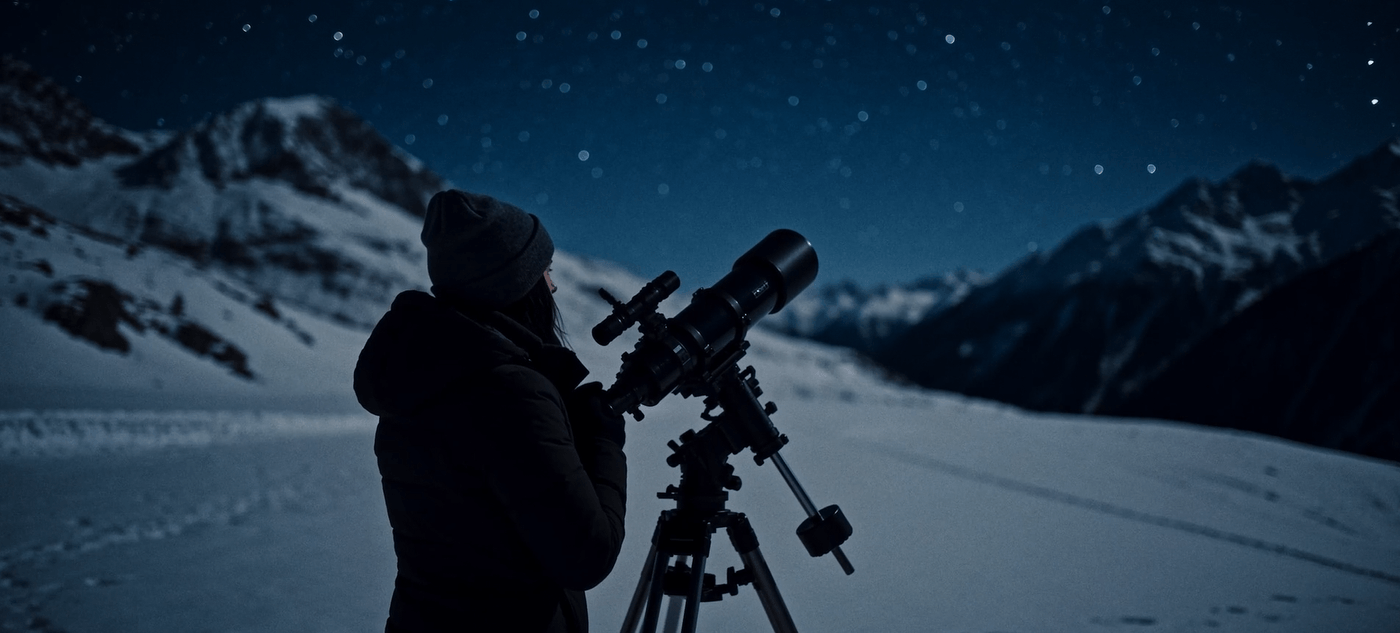
Timing, which was not luck but was certainly help
The Reveal was finished on 13 March 2026. Artemis II lifted off from Kennedy Space Center on 1 April, carried four people around the far side of the Moon, set the record for the farthest humans have ever travelled from Earth, and splashed down on 10 April.
A campaign about a Moon mission went out into a world that spent ten days actually watching one. The films that followed landed after the crew came home, into an audience that had just seen the real images and could tell the difference. That raises the bar rather than lowering it, and it is the reason the visual language stays closer to observation than to science fiction.
The invitation
Describing a commercial in prose is the most reliable way to make sure nobody watches it, and this campaign was built to be travelled through rather than read about.
So instead: the sky is open and the trip is short.
Put something cold in a glass, preferably pink. Find decent sound. Then leave the atmosphere with us, four times over.
Aurora Reveal. Aurora Moon Beach. Aurorateor. Disclosure.
You come back knowing exactly what orange, mandarin, grapefruit and passion fruit taste like at that altitude. That was always the entire job.

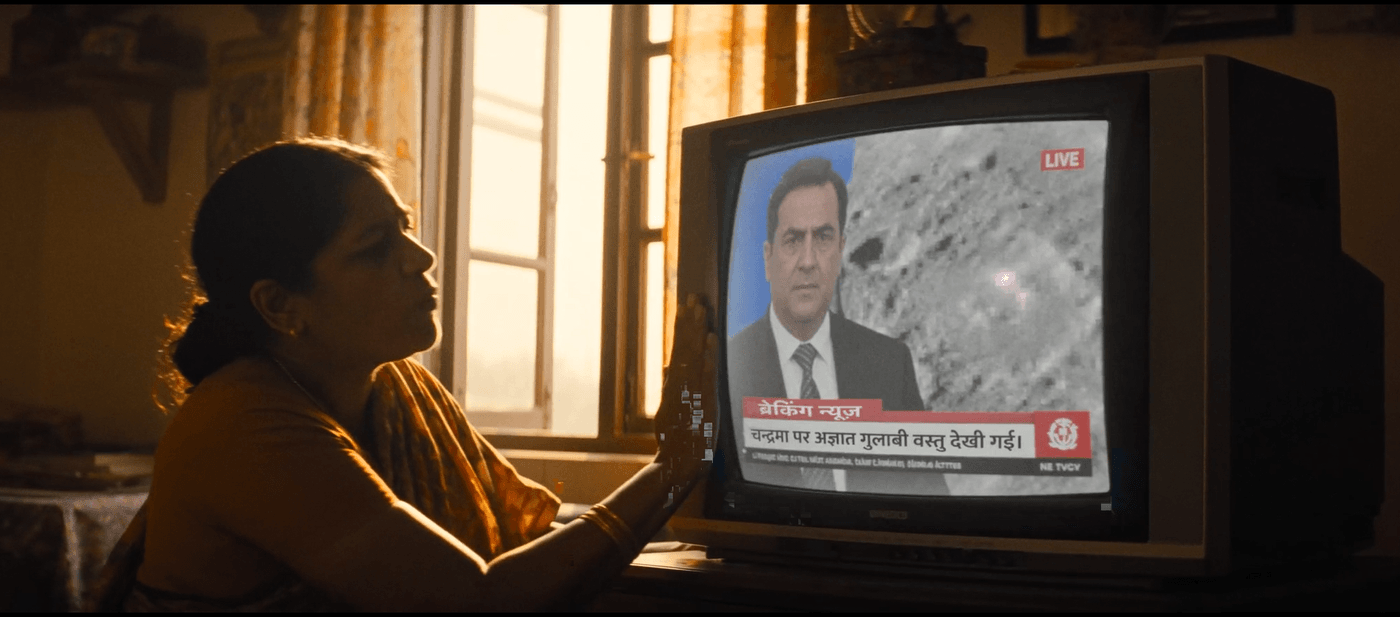
The line it belongs to
Aurora is one of six bottles in FlyOver, Original Taste, the Zanin 1895 line where each product is inspired by a real historical figure paired with the machine that carried them: Elsa Buffa and the Caproni biplanes, Omobono Tenni and the Moto Guzzi, Lella Lombardi and the Alfa Romeo GTA, Vincenzo Lunardi and his balloon over eighteenth-century London.
Five of those bottles stay in the atmosphere. Aurora leaves it. Named for the goddess of the Moon and Apollo's twin sister, Artemis is the one story in the collection where the vehicle is a spacecraft and the destination is not a place on this planet. Zanin's own line for it is a good one: the horizon is not a boundary, it is an invitation.

Where it went
FlyOver, Original Taste took first place for product innovation in the Wine, Beer and Spirits category at the Better Future Award, Tuttofood Milano 2026, at Zanin 1895's first appearance at the fair in its 130-year history. Aurora and Pistacchio are now the two priority launches in the United Kingdom, where the non-cream liqueur category is growing at over four percent by value in the on-trade and the audience driving it is between eighteen and thirty-four.
They are the people who will decide whether a pink bottle named after a dawn ends up on a menu.
FAQ
What is Aurora?
Aurora is a citrus and passion fruit liqueur by Zanin 1895, 70cl at 15% vol, part of the FlyOver Original Taste line. It is built on orange, mandarin, grapefruit and passion fruit, and it is dedicated to NASA's Artemis II lunar mission.
What was the strategic problem?
The name Aurora communicates atmosphere but not flavour, which is a real obstacle in the on-trade where a bartender decides in seconds. The campaign had to keep the cosmic identity of the product while making the citrus and passion fruit profile unmistakable.
How does Aurora relate to To Fly Over?
Aurora is one of the six bottles in the line. The wider brand and narrative project is documented in our To Fly Over case study.
Can Onymous Studios produce a commercial campaign for my product?
Yes. We work with brands on concept, direction, production and post, including generative and hybrid pipelines that make ambitious imagery affordable at launch-scale budgets. Contact studios@onymous.it.
Got a bottle, a machine, or an idea that needs a sky?
Contact us.